


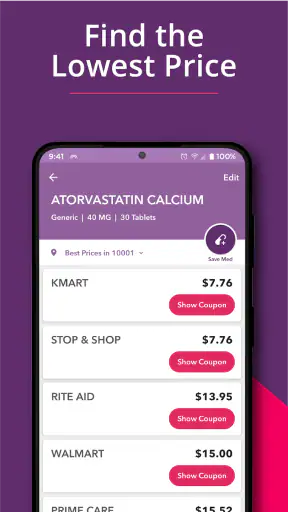
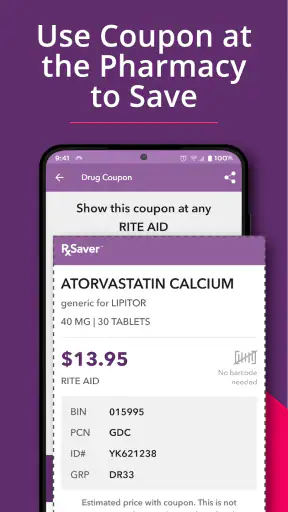
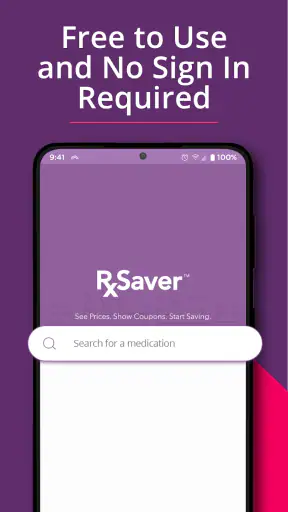
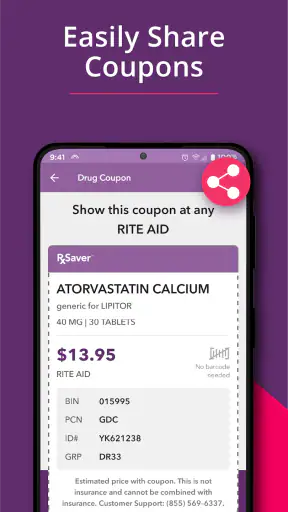
I came away from RxSaver – Prescription Coupons with a fairly clear impression: it is most useful as a quick price-checking companion when a prescription feels unexpectedly expensive, not as a complete replacement for a pharmacist, insurer, or doctor. The app’s purpose is practical. It helps me look for a lower pharmacy price and access prescription coupons without turning the process into a research project.
That focus matters because medication costs can vary in ways that are difficult to predict from the name of a drug alone. A prescription that seems routine may still deserve a second look at the counter. RxSaver, developed by RxSaver, Inc., gives that moment a simple starting point. It is a free medical app for everyone, and its broad availability makes it approachable for people who want to compare an option before paying.
My recommendation is strongest for people who regularly pay cash, have a high deductible, or want a backup when insurance pricing is disappointing. I would be more cautious about treating a displayed coupon as an automatic guarantee of the final bill. The app can improve the shopping process, but the pharmacy still has the last word on how a prescription is processed.
How RxSaver fits into a real prescription-shopping routine
A useful first check before going to the counter
The most convincing part of the experience is the basic workflow. Instead of accepting the first price I hear, I can use the app to investigate whether another listed option or coupon may reduce the cost. That is especially valuable when I am picking up a medicine for the first time, filling a short-term prescription, or dealing with a medication that is not fully covered.
I would use it before leaving home rather than waiting until I am already standing in line. A practical routine is to have the prescription details nearby, search carefully, review the available result, and then show the coupon information at the pharmacy. This small change turns an unpleasant surprise into a decision I can make with a little more control.
One non-obvious benefit is psychological as much as financial: the app gives me permission to question a price without feeling as though I am challenging the pharmacist. I can arrive with a specific comparison in hand and ask which option applies. That makes the conversation more focused than simply saying that the medicine seems too expensive.
Why the coupon is not the same as insurance
A common mistake would be to assume that a coupon automatically stacks with an insurance plan. I would not make that assumption. Before paying, I would ask the pharmacy to compare the coupon price with the insurance price and confirm which one is lower. In some situations, insurance may be the better route; in others, the coupon could be more useful. The important point is to compare them rather than choosing based on the word “coupon” alone.
This is also why I see RxSaver as a comparison tool rather than a payment system. It can help me locate a possible saving, but I still need to provide the prescription correctly and confirm the final amount. A result inside the app should guide a conversation with the pharmacy, not replace that conversation.
What makes the app appealing for recurring prescriptions
People who refill the same medication often are in the best position to benefit from a price-checking habit. Even when the prescription itself has not changed, the most convenient pharmacy or payment method may not always be the least expensive. Checking before a refill can reveal whether it is worth asking about a different option.
I would not turn this into a time-consuming ritual for every low-cost prescription. The better approach is selective: use RxSaver when the price is significant, when coverage has changed, or when a refill suddenly costs more than expected. That keeps the app useful without making every pharmacy visit feel like a financial audit.
Small details that deserve careful attention
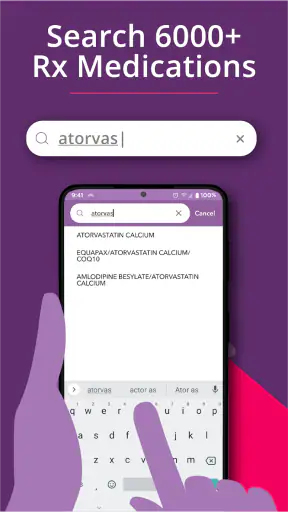
Prescription searches are sensitive to details. The medicine name, strength, quantity, and form can all affect the result. I would slow down when entering information instead of selecting the first similar-looking item. A tablet, liquid, extended-release version, or different strength is not an interchangeable choice simply because the names look related.
Another practical tip is to check the coupon information shortly before using it. I would avoid relying on an old screenshot or assuming that a previous result will remain unchanged. The safest workflow is to open the current result, read the instructions, and present the current coupon information at the pharmacy.
I would also keep the prescription itself in view while searching. RxSaver can help with price discovery, but it is not the place to decide whether a medicine is clinically appropriate. If the app shows several similar entries, the pharmacist is the right person to confirm which one matches the prescription.
Where the app is stronger than ordinary price hunting
The usual alternative is to call several pharmacies one by one, search the web, or simply accept the price quoted at the nearest counter. Those methods can work, but they are inconvenient when I need an answer quickly. RxSaver puts the coupon-search task into a dedicated medical app, which is more direct than opening unrelated search results and trying to judge whether they are current.
Its value is also different from a pharmacy’s own loyalty program. A store-specific program may be convenient if I always use one chain, while RxSaver is more useful when I want to compare the broader choice available to me. I would still check the pharmacy’s own offer when appropriate, because the best route can depend on the prescription and the payment method.
For someone with insurance, the app is best viewed as a second opinion. For someone paying entirely out of pocket, it can become a more important part of the purchase decision. That distinction is easy to miss, but it changes how much effort the app is worth.
The meaningful limitation: a lower displayed price is not the whole transaction
The main weakness is built into this type of service. A coupon can be helpful, but the final experience still depends on the prescription details, the pharmacy, and the way the transaction is processed. The app cannot remove every source of uncertainty. I may find an attractive result and still need to confirm the amount at the counter.
That extra step may frustrate someone who expects a guaranteed checkout price. It also means the app is less appealing for a person who values absolute simplicity over comparison shopping. If I am already satisfied with a reliable insurance price and do not want to discuss alternatives, opening another tool may add more effort than value.
There is a second limitation in the nature of medication pricing itself. A coupon is not a reason to change a prescribed medicine, dose, or quantity. If the cheapest-looking result does not match the prescription, it is not a valid bargain. I would never ask a doctor to switch treatment solely because an app displays a lower price without discussing the medical decision properly.
Who should use it regularly
RxSaver is a particularly sensible choice for adults who pay cash for prescriptions, people between insurance plans, and patients whose coverage leaves them with a large out-of-pocket amount. It can also help caregivers who manage medicines for a family member and want a repeatable way to check costs before visiting the pharmacy.
I can imagine it being useful for a parent picking up a newly prescribed medicine after an urgent-care visit. Rather than discovering the cost only after the prescription is processed, the parent can check the medicine beforehand, compare the available coupon information, and ask the pharmacist to explain the difference between the coupon and insurance. That is a realistic situation where a few minutes of preparation can make the visit less stressful.
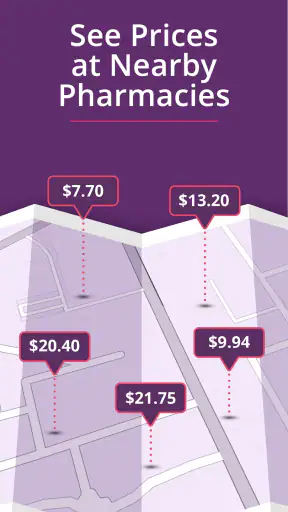
It is also suitable for people who move between pharmacies or live in an area with several nearby choices. The more practical alternatives I have, the more useful a comparison tool becomes. If there is only one accessible pharmacy and its price is already manageable, the advantage may be smaller.
Who should probably skip it
I would not recommend making RxSaver the center of a medication decision for someone who needs clinical guidance rather than price information. The app does not replace a prescriber’s instructions or a pharmacist’s professional review. Anyone unsure about a prescription should settle the medical questions first and use price information only afterward.
I would also hesitate to recommend it to someone who expects every coupon to work identically at every pharmacy or who dislikes verifying details at checkout. The app rewards a little patience. If I am unwilling to compare the result with insurance, confirm the prescription information, and ask about the final price, I may be better served by the most straightforward payment route available to me.
For people who receive medicines through a program with strict billing rules, I would treat the coupon as something to discuss with the pharmacy rather than something to apply automatically. The app is most effective when I use it as an informed question: “Can you check whether this option is less expensive for this exact prescription?”
Everyday usability and audience reach
The app has been available since January 20, 2012, and its current version is 8.0.4. It supports devices running Android 8.0 or later, which covers many users but still makes the operating-system requirement worth checking before installation. I appreciate that it remains focused on a straightforward medical-shopping task rather than trying to become a general health dashboard.
Its audience is clearly broad. RxSaver has passed one million installs, carries an average rating of 4.5 from around eleven thousand ratings, and has roughly three thousand reviews. Those figures suggest that many people find the basic idea useful, although they do not remove the need to judge whether the coupon workflow fits my own prescription and pharmacy habits.
The free price lowers the barrier to trying it. I can use it when a particular prescription raises a concern without committing to a subscription or a paid planning service. That makes the app easier to recommend as a backup tool, even for someone who may only need it occasionally.
Three habits that make the experience better
- Compare before traveling: I would search while I still have time to choose between pharmacies, rather than discovering the possible saving after arriving at the counter.
- Match every prescription detail: I would verify the medicine, strength, form, and quantity before treating a result as relevant.
- Ask for a side-by-side checkout comparison: I would have the pharmacy compare the coupon with insurance or its usual price, then choose the lower valid option.
These habits are more important than simply installing the app. They turn RxSaver from a passive list of possible discounts into a small but useful decision process. They also protect against the most likely misunderstanding: assuming that the first attractive result must be the final price I will pay.
My final assessment
I think RxSaver succeeds because it addresses a specific problem at the moment people actually feel it: the prescription costs more than expected. Its free access, focused purpose, and coupon-based price checking make it a practical addition to a pharmacy routine, especially for cash-paying users and anyone facing uncertain coverage.
At the same time, I would not describe it as a magic discount button. Its results need to be checked against the exact prescription and confirmed by the pharmacy. That friction is real, but it is also a reasonable trade-off for a tool that helps me avoid accepting the first price without question.
For me, the clearest verdict is this: use RxSaver as a price-checking safety net, not as a substitute for insurance advice or professional medication guidance. If saving money requires a little comparison and one extra question at the counter, the app is worth keeping available. If my insurance already gives me a dependable low price and I never shop around, its role will be much smaller.
Overall, I would recommend RxSaver – Prescription Coupons to people who want a simple way to investigate prescription costs before paying. I would especially suggest it for an unexpectedly expensive refill or a new medicine with unclear coverage. Used with realistic expectations, it can make the pharmacy visit more informed and may help turn an uncomfortable price surprise into a choice I can evaluate.


